


Watch Care
Cleaning, water, storage and servicing — the habits that keep a luxury timepiece running and looking its best.
Quick Facts
A luxury watch is built to last decades, but only if it is looked after. Most damage to fine timepieces comes not from accidents but from small habits — a crown left unscrewed, a watch worn in the shower, a service postponed one year too many. This guide covers what actually matters.
Everyday Care
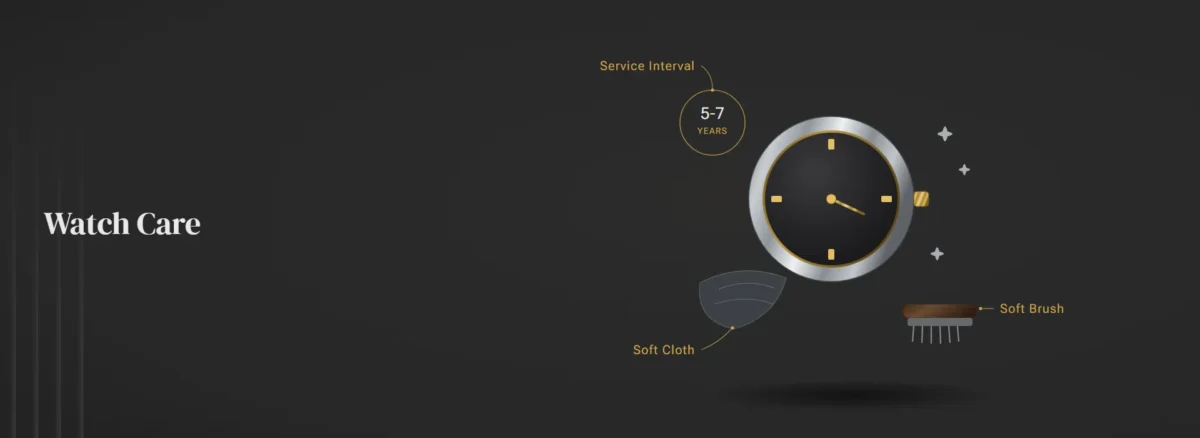
Regular cleaning and sensible handling preserve both the appearance and the function of a watch. Wipe the case and bracelet with a soft, dry cloth to remove dust, skin oils and perspiration, which are mildly corrosive over time. Avoid contact with perfume, hairspray, solvents and household cleaners — these attack gaskets and can dull a polished finish.
| Task | How Often | Why |
|---|---|---|
| Wipe down with a dry cloth | After each wear | Removes oils and perspiration before they build up |
| Clean bracelet thoroughly | Monthly | Residue collects between links and dulls the finish |
| Check spring bars and clasp | Every few months | The most common point of failure on any watch |
| Test water resistance | Annually if you swim | Gaskets degrade whether the watch is worn or not |
| Full service | Every 5–7 years | Lubricants break down long before a movement stops |
Cleaning a Water-Resistant Watch
If the watch has a verified water-resistance rating and a screw-down crown that is fully closed, you can clean it with lukewarm water and a drop of mild soap. Use a soft toothbrush to work between the bracelet links and around the lugs, rinse with clean water, then dry thoroughly with a lint-free cloth — paying particular attention to the gaps between links, where moisture sits longest.
Cleaning a Non-Water-Resistant Watch
Watches with no water-resistance rating, or with a leather strap, should never meet water. Wipe the case with a dry, soft cloth only. Remove dust from around the crown and lugs with a soft dry brush. For anything beyond surface cleaning, take it to a professional rather than risking moisture near the movement.
Water and Moisture
Always confirm the crown is fully screwed down before any contact with water. An unsecured screw-down crown removes the watch’s primary seal and is the single most common cause of water damage.
Even a well-sealed watch should stay out of the shower. Steam consists of water molecules small enough to pass gaskets that would stop liquid water, and hot water expands the case and seals at different rates, momentarily breaking the seal. Soap and shampoo attack the rubber compounds directly.
Handling and Impact
Handle the watch gently and be deliberate about when you wear it. Sports involving sharp shocks — racquet sports, golf, weight training — transmit impacts directly into the movement, and a hard knock can disturb the balance staff or shift a gasket seating even when the case shows no mark.
Put a watch on and take it off over a soft surface. Most drops happen during those few seconds, not during wear.
Straps and Bracelets
Check your strap or bracelet regularly and replace or repair it when worn. On a bracelet, inspect the spring bars, the clasp and the link pins. On a leather strap, look at the area where it bends against the lugs — that is where the material fails first, usually without warning.
Leather straps have a working life measured in months to a couple of years depending on wear, particularly if exposed to perspiration. Rubber and metal last considerably longer.
Storage
Store watches in a dry place, out of direct sunlight and away from strong magnets — speakers, laptop closures and magnetic phone mounts are all sources strong enough to magnetise a mechanical movement and disrupt its rate. A watch box or soft pouch is sufficient for most collections.
A watch winder is worth considering for an automatic with a perpetual calendar, where resetting after the watch stops is genuinely involved. For a simple automatic, it is a convenience rather than a necessity.
Batteries and Servicing
Replace a quartz battery promptly when it runs low. A depleted cell can leak and corrode the movement, and that damage often costs more than the watch is worth. Have it done by a professional who will replace the case-back gasket and pressure test the watch afterwards — a battery change is one of the most common moments for water resistance to be quietly lost.
A full mechanical service involves dismantling the movement, cleaning every component, replacing worn parts, re-lubricating and regulating the watch, then testing it across positions. It also covers the case, crystal and bracelet. The interval most manufacturers recommend is five to seven years.
Caring for Iced-Out Pieces
Stone-set watches need a gentler routine. Rinse with clean water after wear and dry thoroughly, working carefully around the settings where residue collects and dulls the stones faster than anything else. Avoid ultrasonic cleaners entirely — the vibration can loosen settings.
Have the settings checked when the watch is serviced. A stone that has begun to work loose is far cheaper to re-set than to replace once lost.
Common Mistakes to Avoid
- Showering with the watch on. Steam and heat defeat seals that would comfortably hold against a swimming pool.
- Leaving the crown unscrewed. It removes the main seal entirely and is the most common cause of water damage — and the easiest to prevent.
- Skipping the pressure test after a battery change. Opening the case back breaks the seal. Without a new gasket and a re-test, water resistance is unverified.
- Waiting for the watch to stop before servicing. By the time a movement visibly fails, its parts have usually been wearing against each other for years.
- Storing a watch next to magnets. Laptop closures and magnetic phone mounts are strong enough to magnetise a movement and throw its rate out by minutes a day.
Frequently Asked Questions
Wipe the case and bracelet with a soft dry cloth after each wear to remove skin oils and perspiration, which are mildly corrosive over time. Give a water-resistant watch a fuller clean with lukewarm soapy water about once a month, working between the bracelet links where residue collects.
It is best not to, whatever the rating. Steam consists of water molecules small enough to pass gaskets that would stop liquid water, and hot water expands the case and seals at different rates. Soap and shampoo also attack the rubber gasket compounds directly.
Most manufacturers recommend a full service every five to seven years. Lubricants degrade long before a movement visibly fails, so waiting until the watch stops usually means components have been wearing against each other for some time.
The movement is dismantled, every component cleaned, worn parts replaced, then the movement is re-lubricated, reassembled and regulated across multiple positions. A proper service also covers the case, crystal, gaskets and bracelet, and finishes with a water-resistance test.
Dry cleaning only. Wipe the case with a soft dry cloth and remove dust from around the crown and lugs with a soft dry brush. Never use water, and take it to a professional for anything beyond surface cleaning.
Take it to a watchmaker immediately rather than waiting to see whether it clears. Condensation means water has already reached the movement, and corrosion begins within days. Prompt drying costs far less than repairing rust damage.
Keep it dry, out of direct sunlight and away from strong magnets - laptop closures and magnetic phone mounts are strong enough to magnetise a movement. A watch box or soft pouch suits most collections. A winder is worth it mainly for automatics with complicated calendars.
Yes. Replace a flat battery promptly, since a depleted cell can leak and corrode the movement. Have it done by a professional who will fit a new case-back gasket and pressure test afterwards - a battery change is one of the most common moments for water resistance to be lost.
Rinse with clean water after wear and dry thoroughly, working gently around the stone settings where residue collects and dulls the stones. Avoid ultrasonic cleaners entirely, as the vibration can loosen settings, and have the settings checked whenever the watch is serviced.
Inspect the area where the strap bends against the lugs - that is where it fails first, usually without warning. Depending on wear and exposure to perspiration, a leather strap lasts from several months to a couple of years, considerably less than rubber or metal.
Conclusion
Caring for a watch is mostly a matter of small consistent habits rather than occasional effort: wipe it down, keep the crown screwed in, keep it away from steam and magnets, and service it on schedule. Do that and a fine timepiece will outlast the person who bought it.








Worldwide Delivery
Enjoy complimentary overnight shipping with fast delivery, ensuring convenience and prompt luxury service.
14 Days Returns
Experience peace of mind with our satisfaction guarantee, ensuring premium quality and unmatched customer service.
Lifetime Warranty
Shop with confidence, backed by verified trust ratings, secure transactions, and exceptional quality assurance every time.
24/7 Customer Support
We're here for you anytime, anywhere. Our dedicated customer support team is ready to assist you around the clock.