

Watch Materials
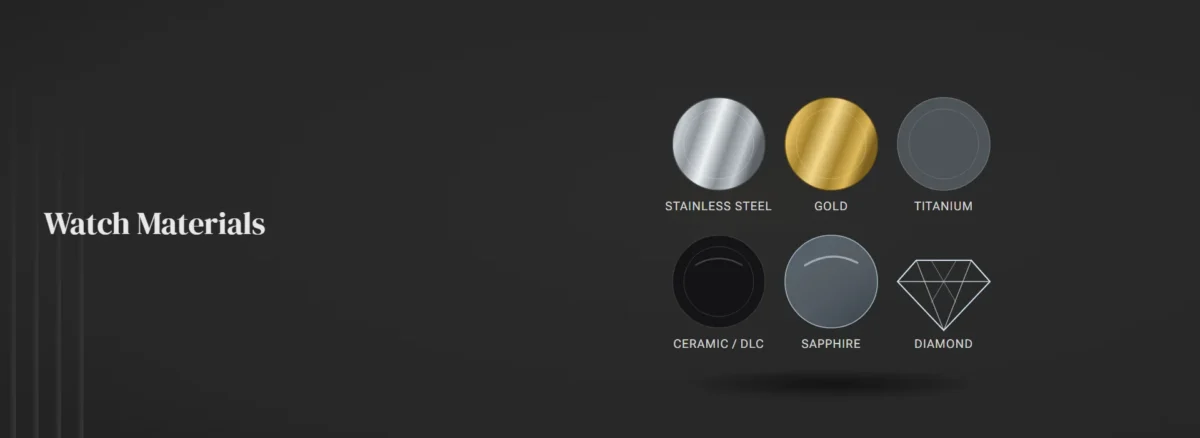
Steel, gold, titanium, ceramic, sapphire and diamond — what each material is genuinely good at, and how to care for it.
Quick Facts
The materials a watch is built from decide how it wears, how it ages, and much of what it costs. A steel case and a gold case of identical design feel entirely different on the wrist and demand different care. This guide covers the materials used in luxury timepieces and what each one is actually good at.
Case and Bracelet Metals
Every Kloira watch is crafted with precision, using only high-quality materials. From the brilliance of diamonds to the strength of stainless steel, each component is selected to meet exacting standards for both appearance and longevity.
| Material | Key Property | Weight | Best Suited To |
|---|---|---|---|
| Stainless steel | Corrosion resistance and strength | Medium | Everyday wear in any setting |
| Titanium | Very high strength-to-weight ratio | ~40% lighter than steel | Larger cases and sensitive skin |
| Gold | Prestige and warmth of colour | Heavy | Dress pieces and statement watches |
| Ceramic | Extreme scratch resistance | Light | Bezels and colour-stable cases |
| DLC coating | Hard, matte black surface | Adds none | Blackened cases and bracelets |
| Sapphire crystal | Optical clarity, 9 on the Mohs scale | Light | Watch glass and exhibition backs |
Stainless Steel
Renowned for its robustness and classic appeal, stainless steel provides a timeless, durable finish that complements any style. It resists corrosion, takes both brushed and polished finishes well, and — importantly — can be refinished by a watchmaker to remove years of accumulated scratches.
Ceramic
Ceramic offers a sophisticated, modern look with exceptional scratch resistance and lightweight comfort, which makes it well suited to everyday wear. Its colour is fired through the material rather than applied to the surface, so it will not fade with sun exposure. The trade-off is brittleness: ceramic resists scratching far better than metal but can chip under a hard, concentrated impact.
Titanium
Titanium is roughly forty percent lighter than stainless steel while offering comparable strength. It is also hypoallergenic and highly resistant to corrosion, including saltwater, which makes it a common choice for dive watches and for anyone who reacts to nickel in steel alloys. Its natural finish is a darker, greyer tone than steel.
Diamond-Like Carbon (DLC)
DLC is a coating rather than a base material. A thin film of carbon is bonded to the metal surface, producing an extremely hard, low-friction, matte black finish. It resists scratching considerably better than paint or PVD, and its depth of colour is what makes it popular on blackened and iced-out pieces. Because it is a surface layer, deep damage exposes the metal beneath and requires re-coating rather than polishing.
Sapphire Crystal
Sapphire is used for the glass over the dial and for exhibition case backs. Synthetic sapphire sits at 9 on the Mohs hardness scale — second only to diamond — so in normal wear it resists scratching almost entirely. It is also brittle relative to mineral glass, so it protects against abrasion better than against sharp impact. Quality sapphire carries an anti-reflective coating to cut glare.
Strap Materials
Leather Straps
Crafted from premium leather, a good strap offers timeless appeal and real comfort, softening and developing character as it ages. Leather is the least water-tolerant option: repeated moisture breaks down the fibres and the stitching, so it suits dress wear rather than swimming.
Rubber Straps
Rubber is ideal for active use, offering water resistance and durability with a modern, sporty look. It handles chlorine and saltwater without complaint and cleans up with plain water, which makes it the practical choice for anything involving water.
Diamonds and Stone Setting
Hand-selected diamonds add opulence to a timepiece, but setting quality matters as much as stone quality. Stones must be seated securely enough to survive daily knocks while leaving enough of the pavilion exposed for light to return through the stone. Poor setting shows itself in two ways over time: stones that loosen, and stones set so deep that they look dull regardless of their grade.
Common Mistakes to Avoid
- Treating scratch resistance as toughness. Ceramic resists scratches superbly and chips on a sharp impact. Steel scratches easily and absorbs the same blow without damage.
- Polishing a DLC-coated case. The black is a surface film only microns thick. Polishing removes it and exposes the metal underneath — the fix is re-coating, not buffing.
- Wearing a leather strap in water. Even brief repeated soaking breaks down the fibres and rots the stitching from the inside.
- Judging gold by colour alone. Colour comes from the alloy. Karat weight determines how much gold is present, and therefore how soft the case is and how easily it marks.
- Assuming every clear crystal is sapphire. Mineral glass and acrylic look similar when new and scratch far more readily. A water droplet beads high and tight on sapphire; on acrylic it spreads.
Frequently Asked Questions
Stainless steel is the best all-round choice: strong, corrosion-resistant, affordable and refinishable. Titanium suits those wanting less weight or who react to nickel. Gold and platinum offer prestige at the cost of softness, and ceramic offers exceptional scratch resistance but can chip on impact.
Yes, for almost any watch you intend to wear regularly. Synthetic sapphire sits at 9 on the Mohs hardness scale, second only to diamond, so it resists the everyday abrasion that quickly clouds mineral glass or acrylic. It is more brittle than mineral glass, so it favours scratch resistance over impact resistance.
DLC stands for diamond-like carbon. It is a thin, extremely hard carbon film bonded to the metal surface, producing a matte black finish that resists scratching far better than paint or PVD. Because it is a surface layer, deep damage exposes the metal beneath and requires re-coating rather than polishing.
Neither is strictly better. Titanium is roughly 40% lighter with comparable strength, is hypoallergenic and resists saltwater corrosion well, which suits large or sports watches. Steel is denser, takes a higher polish, and is easier for a watchmaker to refinish.
Ceramic is highly scratch-resistant — considerably more so than steel — and its colour runs through the material rather than sitting on the surface, so it does not fade. The trade-off is brittleness: a hard, concentrated impact can chip ceramic where steel would simply dent.
Place a small drop of water on the glass. On sapphire it beads high and tight; on acrylic or mineral glass it spreads out more. Sapphire also feels noticeably cooler to the touch and shows less surface scratching on a watch that has seen regular wear.
Colour comes from the alloy mixed with the gold, and karat weight determines how much pure gold is present. Lower karat gold, such as 14k, is harder and more scratch-resistant than 18k. White gold is typically rhodium-plated, which wears over time and needs occasional re-plating.
Generally no, particularly on a watch set with stones or fitted with a leather strap. Ultrasonic vibration can loosen settings and drive moisture past ageing gaskets. Hand cleaning with mild soapy water and a soft brush is safer for anything combining materials.
A good setting holds each stone securely enough to survive daily knocks while leaving enough of the stone exposed for light to return through it. Poor settings show up over time as stones that loosen, or as stones seated so deep that they look dull regardless of grade.
Good-quality rubber and elastomer straps last for years and tolerate chlorine and saltwater well, which makes them the practical choice around water. They eventually harden with UV exposure and age, but they are inexpensive to replace compared with any metal bracelet.
Conclusion
Materials are where a watch meets the world, and the right choice depends entirely on how you wear it. Choose for your week rather than for the specification sheet, and the watch will look better in five years than one chosen purely for prestige.

Worldwide Delivery
Enjoy complimentary overnight shipping with fast delivery, ensuring convenience and prompt luxury service.
14 Days Returns
Experience peace of mind with our satisfaction guarantee, ensuring premium quality and unmatched customer service.
Lifetime Warranty
Shop with confidence, backed by verified trust ratings, secure transactions, and exceptional quality assurance every time.
24/7 Customer Support
We're here for you anytime, anywhere. Our dedicated customer support team is ready to assist you around the clock.